Nozomi Sakata, Associate Professor, Center for the Study of International Cooperation in Education, The IDEC Institute
On February 1, 2013, Hiroshima University established two new programs: the “Distinguished Professors” (DP) program and the “Distinguished Researchers” (DR) program. Individuals who are part of these programs are recognized as senior and junior faculty members respectively, who are engaged in extraordinarily distinguished research activities.
Locally Appropriate Education for Africa and Latin America
Aspiring to Contribute to People in Developing Countries through Education
Comparative and international education, which is my field of specialization, examines the nature of education by comparing and analyzing educational systems, policies, and practices in various countries. My research focuses on educational policies and practices in developing countries, in particular sub-Saharan Africa.
My interest in Africa began with dance, which I started learning in my childhood. As I continued dancing from elementary school through middle and high school, I was fascinated to learn that the origins of hip-hop can be traced back to the communities of black people brought from Africa to America.
Later, I went to the USA to study as part of my undergraduate degree program, where I majored in psychology and minored in dance and anthropology. Through my studies, I came to see the reality of poverty faced by the people of Africa who had captured my interest through dance, and I began to think about what I could do to make a difference. Having taken teacher training courses in Japan, I decided that I wanted to contribute to the region through the field of education. With this goal in mind, I chose to specialize in anthropology and education in my master’s program and to pursue a more in-depth study of education in Africa. I also interned for UNICEF, where I trained in Tanzania for three months while collecting data for my master’s thesis.
Exploring Educational Approaches Rooted in Local Cultural Contexts
For my master’s and doctoral studies, I looked at the implementation and compatibility of learner-centered pedagogy (e.g., active learning, collaborative learning) in Tanzania. Currently, I have expanded the scope of my research to compare education in Africa and Latin America, covering countries such as Tanzania, Ghana, Kenya, and Mexico.
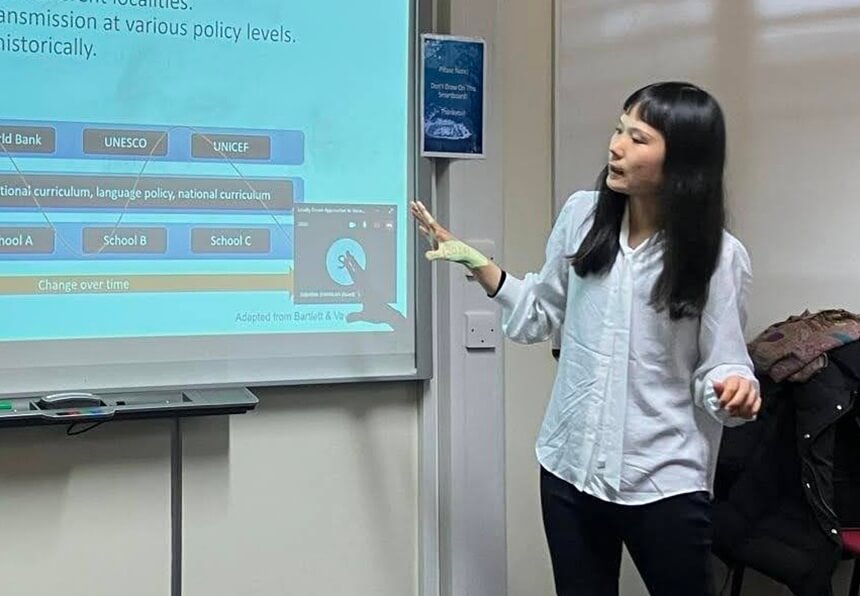
Learner-centered pedagogy is typified by proactive participation by students and pupils, who choose what and how they learn according to their own interests and needs, rather than being force-fed whatever the teacher decides. This pedagogy has been incorporated into Japanese curriculum guidelines and is promoted by international organizations such as UNICEF and UNESCO, but it does not necessarily align with the realities and cultural contexts of developing countries. For instance, it is not uncommon for classrooms to be packed with hundreds of children in these countries, where practicing group work and discussions is not feasible. I see simply importing Western educational approaches into developing countries as problematic, and I believe it is necessary to examine the dynamics of economic power playing out behind those moves, as well as the unspoken power dynamics that have persisted since the colonial period.
On the other hand, as I continued interviews and classroom observations in the field, I began to recognize that there are, in fact, a high degree of affinity between locally developed teaching approaches and Western-born learner-centered pedagogies. For example, the ideas of “learning by doing” and “project-based learning” advocated by American philosopher and educator John Dewey among others resonate with local teaching styles in Africa and Latin America that value learning closely connected to day-to-day life, such as passing farming and fishing skills to the next generation. Therefore, rather than simply criticizing the introduction of Western-style learner-centered pedagogy, I strive to use my research to propose that education policies should be developed based on a thorough understanding of the pedagogies that local people value.
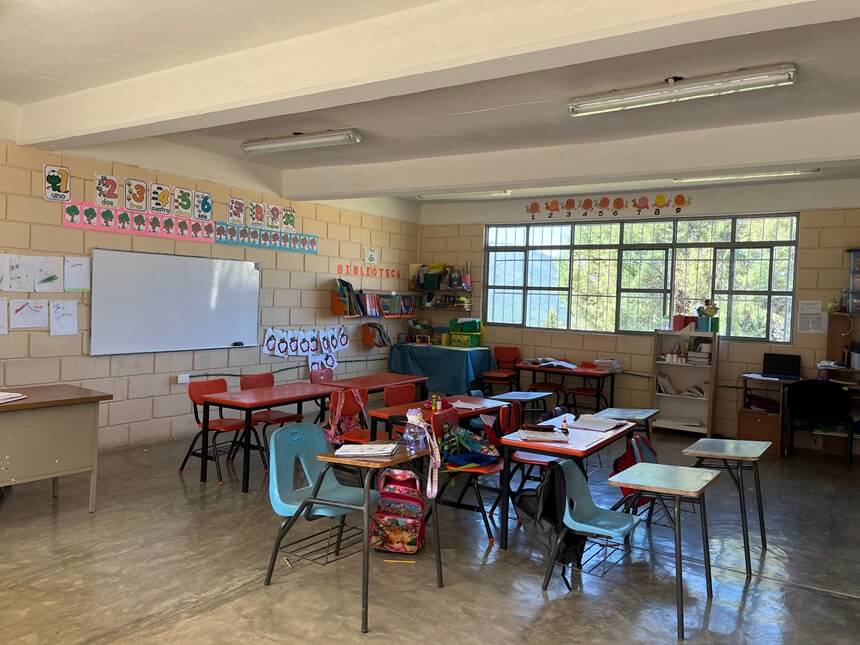
A schoolroom in rural Mexico photographed by the author during fieldwork.
Addressing the Global North-South Imbalances in Research Environments While Conducting Research on Education Aid
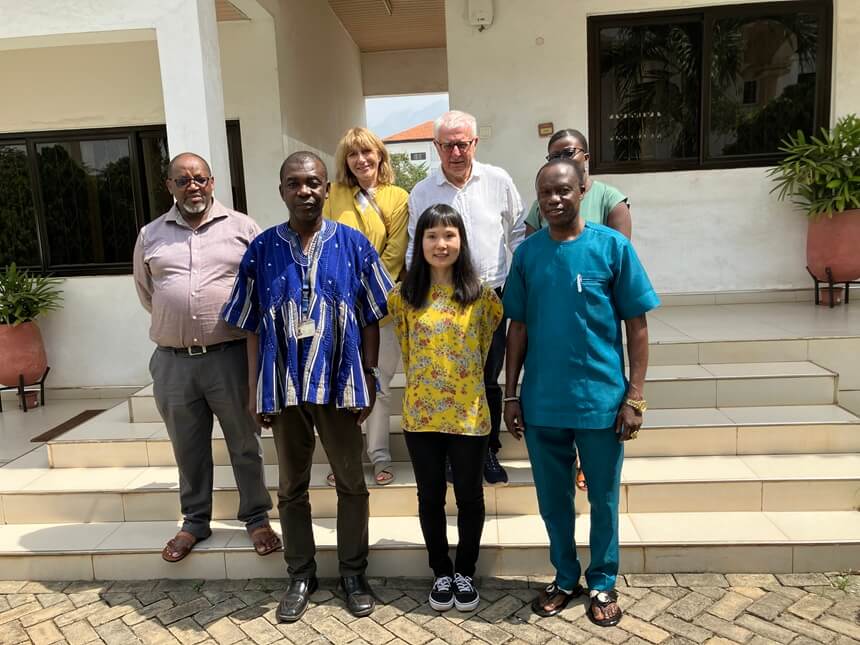
I see it problematic that, not only in the educational policy sector but also within the broader field of comparative and international education, there remains a North-South power imbalance. This is highlighted by the situation in which researchers from the Global North travel to the Global South to collect data, then scurry back to the North to theorize and publish their findings. I hope to create research environments where scholars from the Global South take ownership of their research and formulate their own theoretical frameworks. To this end, I am currently working in collaboration with researchers across several countries including Tanzania and Ghana. One of my core missions as a researcher is to contribute to establishing research environments where scholars from the Global South can exercise leadership in research.
In addition, while my research to date has taken a critical perspective on the Western-style pedagogies used in educational aid by international organizations, I am also interested in bilateral educational aid that falls outside the framework of international organizations. That is why I am also advancing research on Japan’s approach to educational aid as a second pillar underpinning my research. Japanese aid agencies like the Japan International Cooperation Agency adopt an approach that involves extended stays in local communities in order to understand the culture, and to work with the local people to develop educational approaches. I am interested in comparing this Japanese aid with educational aid provided by other countries. Although there is a substantial body of research on this topic that analyzes policy documents, there are relatively few previous studies that carefully capture the voices of the stakeholders involved. By presenting Japan’s educational aid internationally based on empirical research, it could serve as a useful reference for other countries. I am committed to building on this second pillar in the coming years.