
Distinguished Researcher Tsutomu Sawai, Graduate School of Humanities and Social Sciences
On February 1, 2013, Hiroshima University established two new programs: the “Distinguished Professors” (DP) program and the “Distinguished Researchers” (DR) program. Individuals who are part of these programs are recognized as senior and junior faculty members respectively, who are engaged in extraordinarily distinguished research activities.
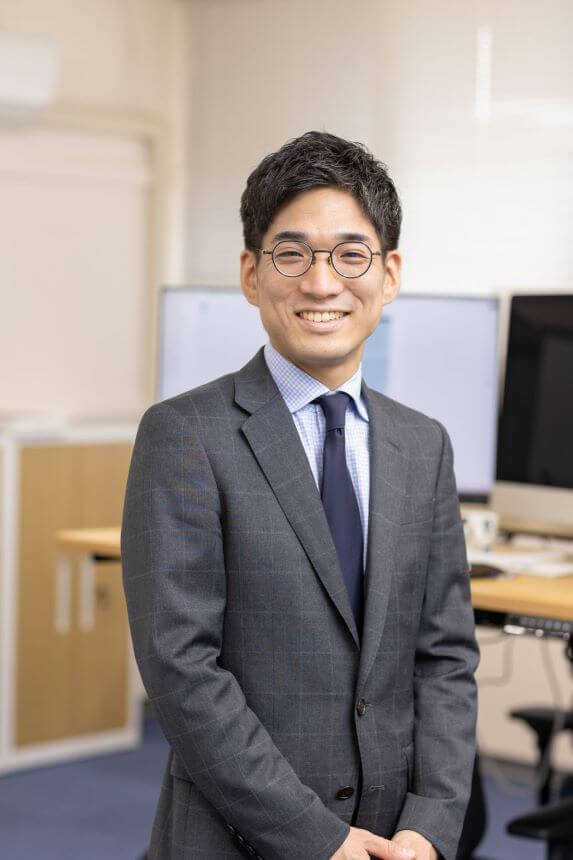
Professor (Special Recognition) Tsutomu Sawai, Graduate School of Humanities and Social Sciences. (Photo courtesy of Tsutomu Sawai)
Professor (Special Recognition) Tsutomu Sawai at the Graduate School of Humanities and Social Sciences specializes in applied ethics. Specifically, his research deals with ELSI (ethical, legal and social implications) and RRI (Responsible Research and Innovation), frameworks for ethics in research, and he is a globally recognised researcher in the field. Additionally, Sawai is a Visiting Professor at the Centre for Biomedical Ethics, Yong Loo Lin School of Medicine, National University of Singapore.
As a graduate student at Kyoto University, Sawai majored in Japanese Ethics and Religion. He elected to specialize in ethics of scientific research for his doctoral degree. As part of his doctoral program, he spent a year at the University of Oxford. His advisor there recommended that he focus on the ethics of stem cell research—particularly, induced pluripotent stem cells (iPSCs). This was at a time when the field was drawing intense scientific and financial interest, as well as raising equally significant ethical concerns.
This event marked a major turning point; following his experiences at at the University of Oxford, Sawai decided to continue in the field of ethics of stem cell research. One major project, which begun at Kyoto University and continued after he joined Hiroshima University, has focused on the ethical issues, legal, and social issues of brain organoids. Organoids are three-dimensional, in vitro constructs that recapitulate key structural, functional, and biological features of organs, and they have become indispensable tools for studying development and disease. As the brain is closely tied to human consciousness, a plethora of ethical issues must be addressed when developing and utilizing brain organoids. Sawai’s work in this area has made him not only Japan’s foremost expert on the topic but also a world-leading researcher. As a result of extensive cross-disciplinary discussions, he has co-authored a consensus paper on the topic—which is scheduled to be published in the journal in Asian Bioethics Review—along with other leading researchers.
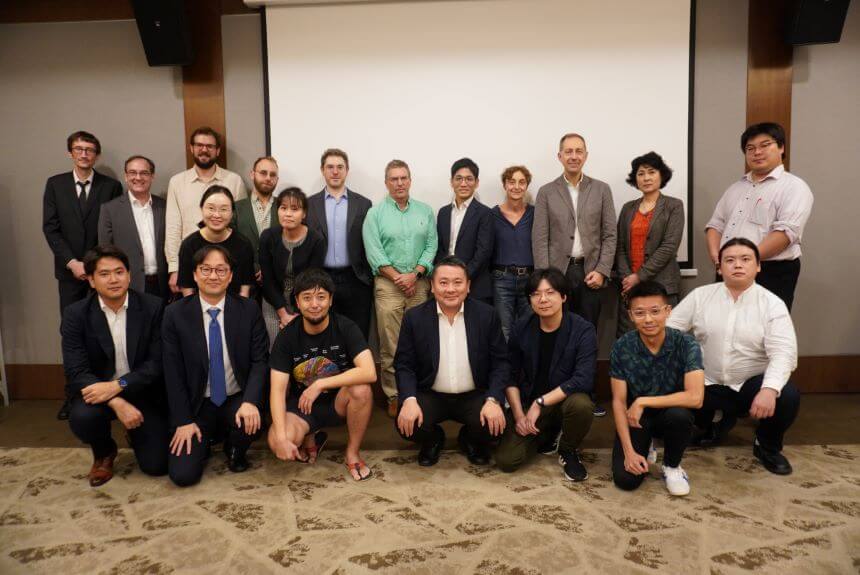
Sawai (back row, fifth from right) at the International Bioethics Symposium, Singapore, 2024 (Photo courtesy Tsutomu Sawai).
After moving to Hiroshima University, Sawai broadened the scope of his research. His group now addresses a wide range of topics related to ELSI and RRI. ELSI refers to research that anticipates and addresses the ethical, legal and social Issues (or implications) of emerging sciences, originally genomics, and now many others; RRI (Responsible Research and Innovation) aims to reshape the traditional model of knowledge production toward one that is embedded in society and responsive to societal expectations, needs, worries and problems. Both ELSI and RRI are relatively recent approaches to ethics, and Sawai’s goal is to develop best practices for these approaches, both in the international and Japanese contexts.
In particular, Sawai’s group focuses on the cutting-edge research in advanced science, medicine and engineering. By their very nature, these fields present numerous ethical issues that are actively debated and currently remain unresolved. Sawai’s work on brain organoids is one of these research areas.
Currently, Sawai is collaborating with subject-matter experts across Hiroshima University to address the ethical issues raised by their research. One example is the haptics research led by Professor Yuichi Kurita in the Biological System Engineering Lab, Graduate School of Advanced Science and Engineering. Professor Kurita is developing technologies to assist with learning physical movements, not only in sports but also in a wide range of everyday activities. As haptic technologies can pose risks to users, they raise important ethical issues. Sawai is also interested in the broader educational and entertainment applications of this research, and the resultant ethical concerns that must be addressed.
Another example is the use of remote sensing technology, where data collected by satellites is used to analyse and track a wide range of variables. This includes human activities, which is where ethical considerations come into play. Sawai’s group has 10 major ongoing projects, of which six are in applied ethics, and four are basic research.
Sawai would like to take advantage of opportunities afforded to him as a Distinguished Researcher to become a leader in the practice of applying ELSI and RRI approaches. His ultimate goal is to help build a better society using these approaches, one where research practices and applications are fully responsive to and serving the communities they are meant to benefit.
For more information on Professor (Special Recognition) Tsutomu Sawai’s career and research achievements, please see the Profiles of Faculty and Research Scholars.
Written by Sohail Keegan Pinto, Science Writer (Specially Appointed Academic Research Fellow)
