
Distinguished Researcher Dahlia Simangan, Graduate School of Humanities and Social Sciences
On February 1, 2013, Hiroshima University established two new programs: the “Distinguished Professors” (DP) program and the “Distinguished Researchers” (DR) program. Individuals who are part of these programs are recognized as senior and junior faculty members respectively, who are engaged in extraordinarily distinguished research activities.
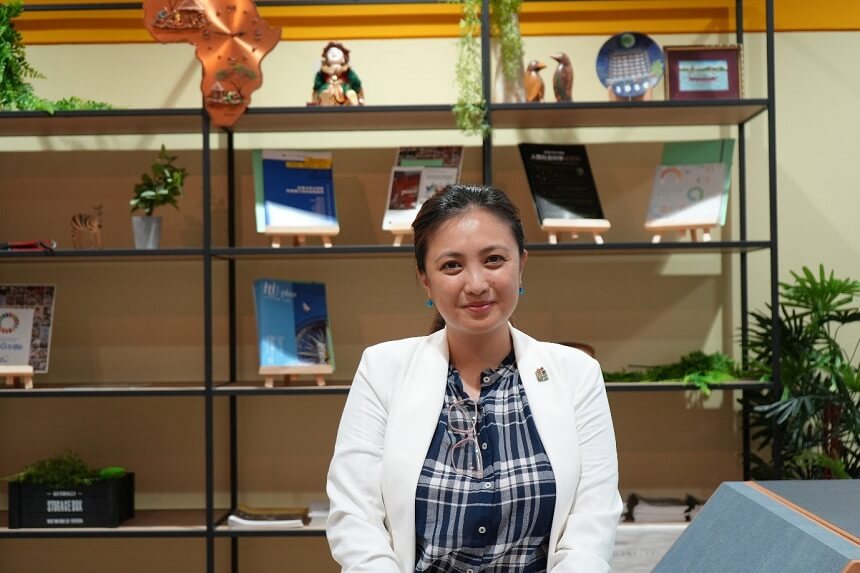
Associate Professor Dahlia Simangan, Graduate School of Humanities and Social Sciences. (Photo by Sohail Keegan Pinto)
Associate Professor Dahila Simangan at The IDEC Institute specializes in international relations, primarily focusing on the different aspects of post-conflict peacebuilding. Simangan is also affiliated with the Graduate School of Humanities and Social Sciences and the Graduate School of Innovation and Practice for Smart Society, and is a core member of the Network for Education and Research on Peace and Sustainability (NERPS).
Currently, her three major research topics are international relations in the Anthropocene; environmental peacebuilding; and urban peacebuilding. By their nature, all three of these topics are interdisciplinary, and Simangan collaborates with many researchers and stakeholders.
Simangan developed an interest in international relations during her time as a civilian researcher for the Armed Forces of the Philippines, where she handled bilateral agreements with militaries of other countries. This experience drove her to pursue graduate studies in international relations.
During her master’s degree, Simangan was introduced to the concept of “Responsibility to Protect” (R2P) and focused on humanitarian interventions. R2P is a global political commitment which was endorsed by the United Nations General Assembly at the 2005 World Summit to prevent genocide, war crimes, ethnic cleansing and crimes against humanity.
Consequently, Simangan developed interest in a resulting question: what happens after interventions? For her PhD, she focused on case studies of Cambodia, Kosovo, and Timor-Leste, investigating the developments that occurred after the UN peacekeeping forces left these countries. Simangan considers this the beginning of her interest in post-conflict peacebuilding. Since then, her interests have diversified but remain in the sphere of peacebuilding.
For Simangan, the most interesting aspect of research is keeping up to date with novel developments in the field. The field of post-conflict peacebuilding is interdisciplinary and is also vast and diverse; hence, there is much novel research being carried out. As an example, research in fields as diverse as urban planning, crime, and architecture can be linked to urban peacebuilding. Simangan is also interested in the fieldwork involved in her research.
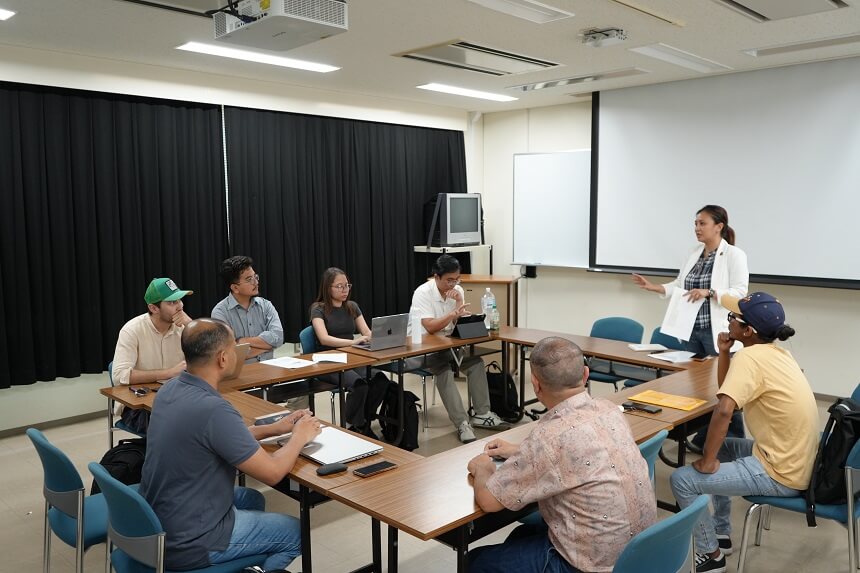
At the Peace Research and Reflexive Solutions (PRAXIS) Lab, Simangan supervises graduate students of the International Peace and Coexistence Program and collaborates with them as emerging peace researchers and future peacebuilders. (Photo by Sohail Keegan Pinto)
Simangan is well-read in a wide variety of fields that are linked to her research, which helps her work closely with researchers in other fields. In addition, she keeps herself well-informed of the cultural mores and political situations of the areas she conducts fieldwork in. This is essential not only to respect the people living in these areas, but also to acknowledge the fraught political landscape that accompanies peacebuilding efforts.
The sequence of progressing from conflict to conflict resolution to peacebuilding has traditionally been conceived of as a linear process, but Simangan is part of the newer paradigm that acknowledges that this process is rarely sequential but is more often cyclical, and sometimes even concurrent.
As a researcher at Hiroshima University, Simangan’s first JSPS KAKENHI-funded research project was about urban peacebuilding in Marawi, Mindanao, following the resolution of the Siege of Marawi. Simangan was able to visit the city three times: first when the city was closed to the public shortly after the siege; second when a national plan had been established to reconstruct the city; and third in 2025, when displaced residents who had been eager to return were still barred from large portions of the city.
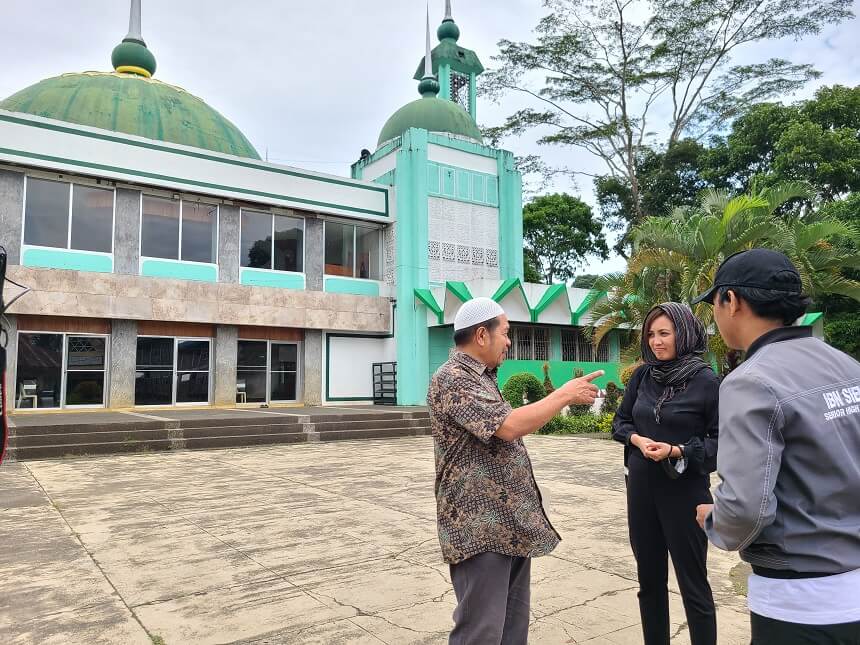
Simangan during one of her visits to Marawi City in the Philippines to understand the urban dynamics of post-conflict peacebuilding. (Photo courtesy of Dahlia Simangan)
Simangan has begun to work on an Urban Peacebuilding Geoportal which “archives geolocations, photographs, and videos of several key sites during urban conflicts,” the purpose of which is to “record and examine the physical and symbolic post-conflict transformation of these sites for the use of students, researchers, civil society members, and policymakers working on making peacebuilding policies.” This project is in its early stages, and Simangan plans to add other post-war cities, such as Jaffna in Sri Lanka, Manila in the Philippines, and Hiroshima City.
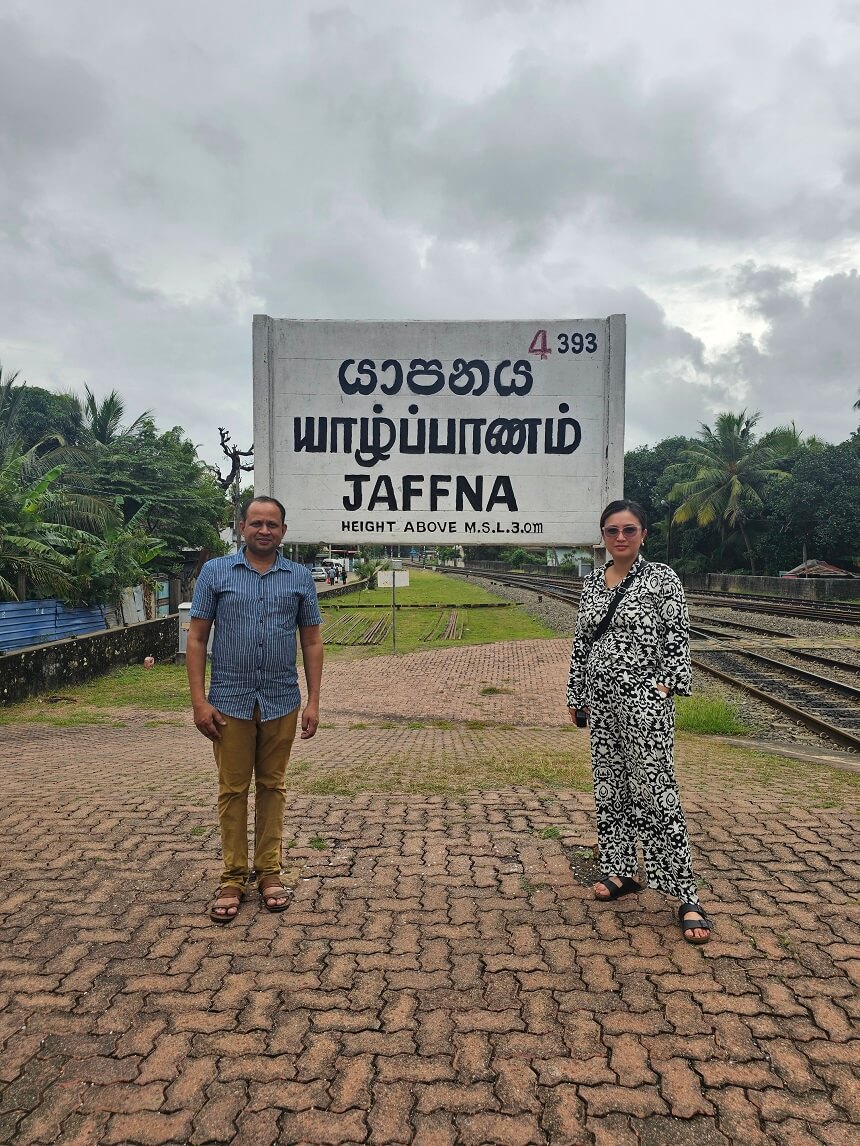
Simangan with her PhD student, Gayan Kahandawalaarachchi, during their fieldwork in Jaffna, Sri Lanka. (Photo courtesy of Dahlia Simangan)
Simangan was also involved in a conceptual research project at NERPS looking at the interaction between peace and sustainability. Included among the work they published were an analysis of concepts such as positive peace, a granular breakdown of aspects of sustainability, and a rigorous analysis of the interplay between positive peace and the SDGs (Sustainable Development Goals).
Currently, Simangan is carrying out a JSPS KAKENHI-funded research project on environmental peacebuilding, specifically on what she has called “Everyday Environmental Peacebuilding:” how local communities maintain levels of peacefulness and continue environmentally sustainable practices despite conflict and environmental risks. She is first looking into these dynamics within communities near large hydropower projects in Nepal and the Philippines and planning to expand this project to other relevant cases. Complementing this fieldwork, Simangan is currently developing a geoportal of environmental peacebuilding activities from around the world, especially those at the local or community level.
Simangan’s contributions to peace and conflict studies have been recognized by the International Studies Association (ISA), a world-renowned interdisciplinary association dedicated to understanding international, transnational and global affairs. She was bestowed the ISA PEACE Emerging Scholar Award in 2025.
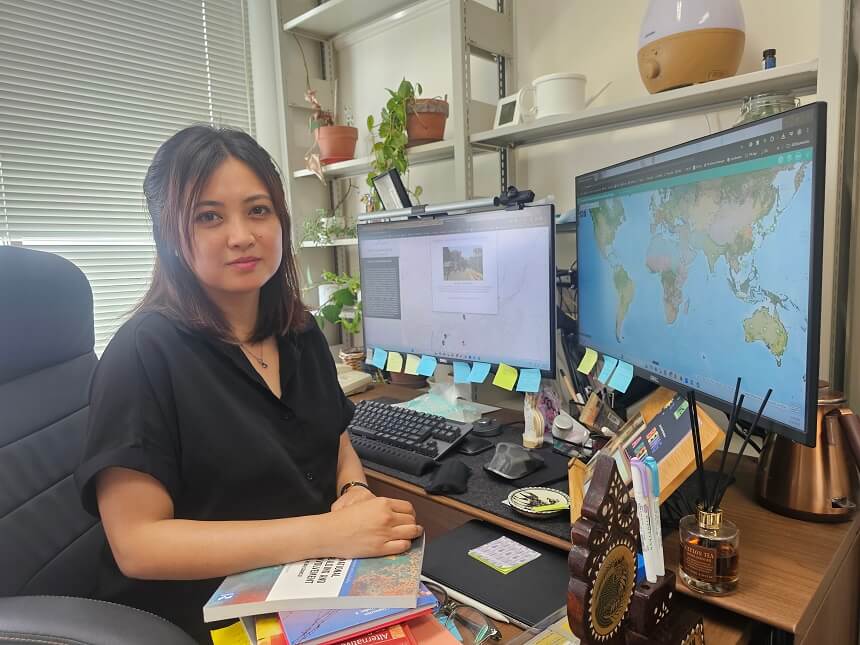
Associate Professor Dahlia Simangan explaining the Urban Peacebuilding Geoportal she developed. (Photo Courtesy of Dahlia Simangan)
As a Distinguished Researcher, Simangan wants to make peace research at Hiroshima University more interdisciplinary in nature, and to showcase peace research at the University to international collaborators. In the long term, Simangan wishes to become a truly interdisciplinary researcher. She would also like to attain sufficient expertise to be able to advise peacebuilding policy and projects, thus giving back to the communities that have supported her research.
For more information on Associate Professor Dahlia Simangan’s career and research achievements, please see the Profiles of Faculty and Research Scholars.
Written by Sohail Keegan Pinto, Science Writer (Specially Appointed Academic Research Fellow)
