
実施報告
医系科学研究科(保) Md Moshiur Rahman 准教授 (2025年度 広島大学研究ネットワーク形成支援助成制度【タイプC】)
| 名前 | Md Moshiur Rahman 准教授 |
|---|---|
| 所属 | 医系科学研究科(保) |
-
イベント名: Social Tech Summit 2025: The 7th International Conference on Healthcare, SDGs and Social Business
- 開催期間: 2025年10 月2日~2025年10月4日
- 開催場所: 広島市・広島大学霞キャンパス(広仁会館)
- 総参加者数: 209名 (うち海外研究者83名) ※オンライン159名
- 実行委員を務めた若手研究者: 医系科学研究科(保) 陳三妹 准教授、加古まゆみ 准教授
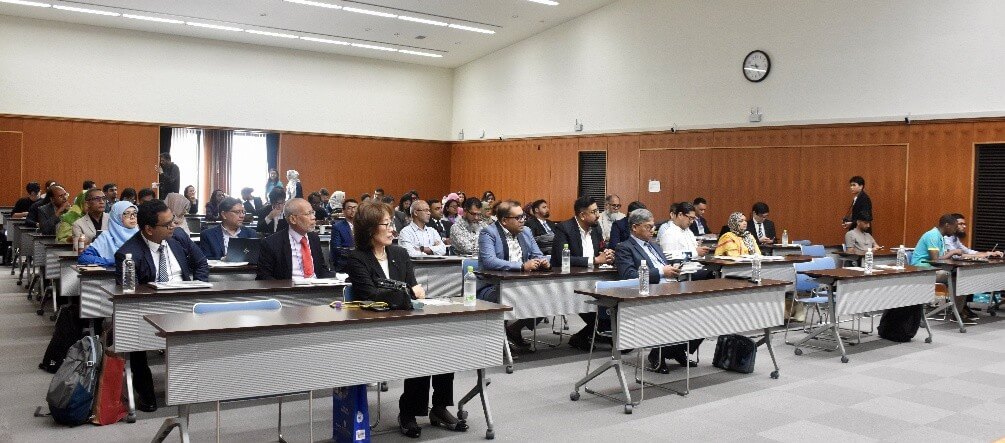
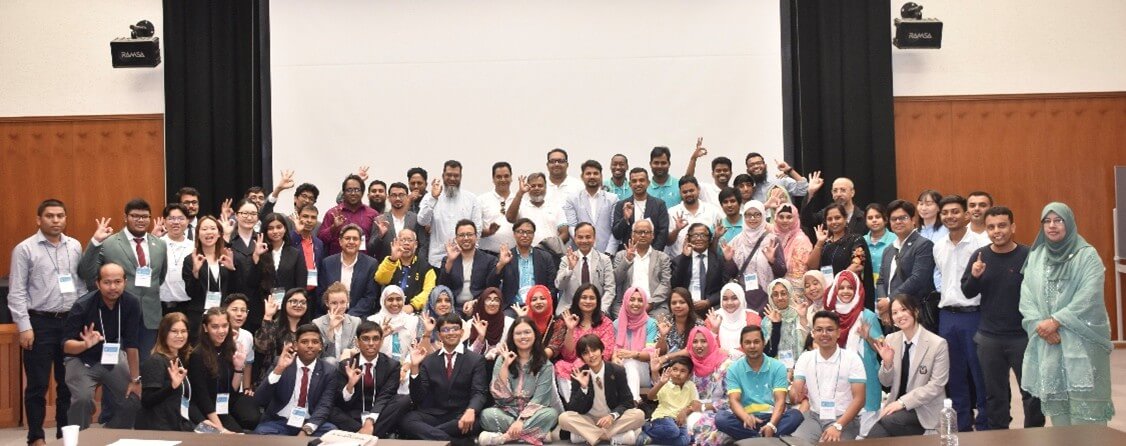
The SocialTech Summit 2025: The 7th International Conference on Healthcare, SDGs, and Social Business was successfully held at the Kasumi Campus of Hiroshima University, Japan, from October 2 to 4, 2025. This international event served as a dynamic platform for dialogue, innovation, and collaboration among global experts committed to advancing healthcare, sustainable development, and social innovation.
The summit integrated the themes of Healthcare, the Sustainable Development Goals (SDGs), and Social Business, bringing together diverse perspectives to address global challenges in a holistic way. Its overarching goal was to foster collaboration among researchers, practitioners, and policymakers from both developed and developing countries to co-create solutions for global health and sustainability challenges through innovation and technology.
Conference Theme and Objectives: The theme of the 2025 conference, “Innovating Healthcare, Empowering Humanity,” reflected a shared commitment to reimagining the future of healthcare to make it more inclusive, equitable, and sustainable. The summit emphasized that true innovation in healthcare must go beyond technology, which must also empower communities and strengthen systems to achieve long-term impact. The three-day program included keynote speeches, thematic sessions, panel discussions, poster presentations, and a youth innovation forum. Each session was designed to foster meaningful exchanges between academia, industry, and the public sector, promoting real-world applications of research and encouraging young innovators to contribute fresh ideas.
Participation and Global Reach: The SocialTech Summit 2025 brought together participants from 23 countries, including Australia, Bangladesh, Bhutan, Burundi, Cambodia, Chile, China, Indonesia, India, Japan, Kazakhstan, Kenya, Korea, Malaysia, Morocco, Nigeria, Pakistan, Saudi Arabia, Thailand, Turkey, Uganda, the United Kingdom, and the United States. A total of 368 participants joined the summit, 209 in-person and 159 online, which was reflecting a strong hybrid participation model that expanded the event’s global accessibility. Among the attendees, 216 were from overseas and 152 were from Japan, representing a truly international gathering of experts, students, and practitioners. This diverse participation enriched the discussions with varied perspectives, highlighting both shared global challenges and local innovations in achieving the SDGs through healthcare and social business.
Key Focus Areas: The summit centered on several special focus areas that reflect emerging global priorities:
Digital Health Technologies: Exploring the role of AI, mobile health, and data analytics in improving healthcare accessibility and quality.
Climate and Disaster Resilience: Examining health system preparedness and community-based strategies to mitigate the health impacts of climate change and natural disasters.
Smart Healthcare Systems: Discussing the integration of smart technologies in public health and hospital management.
Social Entrepreneurship for SDGs: Highlighting innovative business models that drive sustainable health and social outcomes.
Throughout the sessions, participants shared research findings, case studies, and implementation experiences, fostering actionable strategies for inclusive and sustainable social impact.
Outcomes and Impacts: The SocialTech Summit 2025 made a significant contribution to strengthening Hiroshima University’s global engagement by fostering partnerships among academia, industry, and society. The event not only facilitated scholarly exchange but also served as a catalyst for new collaborative research initiatives and capacity-building activities.
Strengthening Research Collaboration:
A key achievement of the summit was the enhanced collaboration between Hiroshima University and the International Centre for Diarrhoeal Disease Research, Bangladesh (icddr,b). Supported by the Hiroshima University Research Grant, the summit hosted a senior scientist from icddr,b as an invited speaker. The invited expert delivered a keynote presentation and served as the principal judge for the poster sessions, providing valuable mentorship and feedback to young researchers. This engagement enriched academic discussions and elevated the overall quality of the conference. During the visit, several strategic meetings were held between Hiroshima University faculty members, doctoral students, and early-career researchers to explore potential collaborative initiatives. These discussions led to the drafting of a joint research proposal for submission to the AMED–SATREPS program, focusing on public health collaboration and research capacity development in Bangladesh. As a continuation of these efforts, icddr,b will act as the counterpart institution and initiate the Official Development Assistance (ODA) Technical Cooperation Request through the Ministry of Health and the Ministry of Economic Relations Division (ERD) in Bangladesh. The proposed five-year AMED–SATREPS project aims to implement joint research activities in Bangladesh with the participation of Hiroshima University graduate students, contributing to global health research capacity and the strengthening of institutional partnerships.
Contribution of the Hiroshima University Research Grant: The Hiroshima University Research Grant played a pivotal role in enhancing the quality, impact, and international reach of the SocialTech Summit 2025. The grant supported the invited speaker’s participation, enabled volunteer honoraria, and ensured the smooth organization and operation of the event. Beyond financial assistance, this grant amplified Hiroshima University’s visibility on the international stage by supporting high-level academic engagement, fostering interdisciplinary collaboration, and connecting the university’s research expertise with global networks. Through these efforts, the SocialTech Summit 2025 demonstrated how targeted institutional support can catalyze meaningful academic exchange, promote innovation, and enhance global partnerships in research and education.
Capacity Development and Mentorship: The SocialTech Summit 2025 also served as an excellent platform for developing future international conference organizers among young faculty members and graduate students. Junior researchers were actively engaged in all stages of the conference, including program coordination, speaker communication, event promotion, and on-site logistics. This hands-on involvement allowed them to gain valuable skills in academic event management, cross-cultural communication, and digital conference operations. To ensure continuity, a mentorship system has been established in which experienced faculty members will continue to guide younger staff in organizing future international academic events. The accumulated know-how to include expertise in budgeting, partnership coordination, hybrid conference management, and digital communication, which will serve as a foundation for organizing future large-scale global events at Hiroshima University. As a result, the university has strengthened its internal capacity to host impactful international conferences, ensuring sustainability, innovation, and institutional learning for years to come.
Future Outlook and Initiatives: Building upon the strong foundation established through the SocialTech Summit 2025, Hiroshima University envisions several initiatives for the next fiscal year and beyond to advance its role as a global hub for research, innovation, and collaboration.
Follow-Up Meetings and Joint Workshops: Follow-up sessions will be organized with partner institutions such as icddr,b, Kyushu University, and other collaborating universities to co-develop multi-country research proposals. Priority areas will include digital health innovation, climate-resilient healthcare systems, and social entrepreneurship for sustainable development.
Establishment of an International Research Network: Hiroshima University will launch an International Research Network on Social Technology and Global Health, promoting knowledge sharing, research capacity building, and student exchange programs. This platform will connect researchers from developed and developing countries to co-create and implement innovative solutions to global health challenges.
Future Conferences and Expanded Engagement: Plans are already underway for SocialTech Summit 2026, which will feature expanded participation, new thematic focuses, and deeper engagement with young scholars and professionals. The next summit will build on the experiences and lessons learned from 2025 to strengthen Hiroshima University’s leadership in global health and social innovation.
Developing Future Leaders in Conference Management: The university will continue to nurture young faculty and graduate students as future organizers of international conferences. Training and mentorship programs will help them gain the organizational, communication, and leadership skills required for hosting high-impact global academic events. Through these continued efforts, Hiroshima University aims to enhance its global research visibility, foster long-term partnerships, and contribute meaningfully to achieving the Sustainable Development Goals (SDGs).
Conclusion: The SocialTech Summit 2025 was a milestone event that not only showcased Hiroshima University’s commitment to advancing global health and sustainable development but also strengthened its international partnerships, research capacity, and academic reputation. By bringing together diverse voices from across the globe, the summit successfully bridged gaps between disciplines, sectors, and nations. It demonstrated how universities can serve as catalysts for global collaboration and innovation, addressing complex challenges through interdisciplinary and socially driven approaches. The outcomes of this conference including new research collaborations, enhanced international networks, and the development of young academic leaders, underscore the university’s vision of “building a smart, healthy, and resilient global community.” Through continued collaboration, innovation, and shared learning, Hiroshima University reaffirms its dedication to shaping a better, more sustainable future for all.